
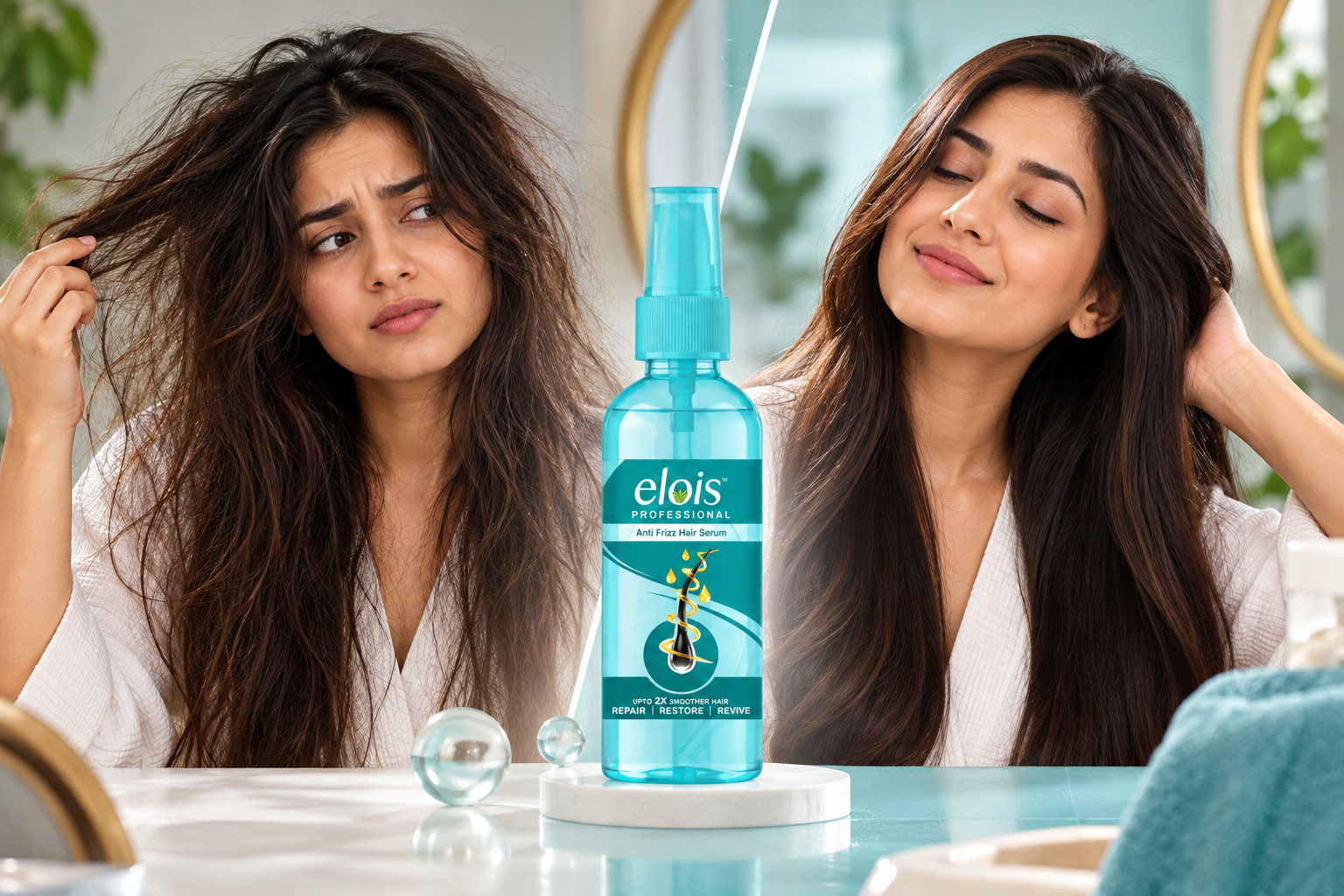
Yesterday, your hair behaved perfectly. Today, it refuses to cooperate. The roots look flat, the ends stick out in every direction, and the hairstyle you could create in five minutes now takes twice as long.
You haven’t changed your shampoo, bought a new conditioner, or deliberately altered your routine. So why does your hair suddenly seem to have different rules?
The answer may be hiding in small changes you haven’t noticed yet. Your hair reacts to its environment, the way you handle it, and the condition of individual strands. Even when your products stay the same, these factors can change the results you see in the mirror.
Before you replace your entire haircare collection, let’s investigate what might actually be making your hair difficult to manage.
1. Your Roots and Ends Might Be Telling Two Different Stories
Look closely at your hair before washing it. Your roots may appear greasy, while the ends feel rough and tangle whenever you run your fingers through them.
How can one head of hair feel oily and dry at the same time?
Your scalp naturally produces sebum, an oil that helps lubricate the skin and nearby hair. However, this oil may not reach the ends of longer hair in sufficient quantities. Meanwhile, the lengths experience repeated washing, brushing, friction, and styling.
Over time, these exposures can affect the hair’s outer cuticle. When strands become rough or damaged, they may catch against one another instead of moving smoothly.
Adding more oil to your roots won’t necessarily improve the condition of your ends. It could simply make your scalp look greasier.
Instead, adjust your routine according to what each area needs. Cleanse your scalp appropriately, apply conditioner to the lengths, and detangle gently to minimise friction.
If your ends are visibly split, a trim may improve their appearance and reduce tangling.
The important clue is where the problem begins. Once you identify whether the difficulty comes from your roots, lengths, or ends, you can make a more targeted adjustment.
But what if your hair feels rough from root to tip, particularly after washing? The water itself may deserve a closer look.
2. Could Your Washing Routine Be Leaving Something Behind?
Freshly washed hair should feel clean, but sometimes it feels coated, heavy, or strangely difficult to style.
You might notice that your roots have lost their volume while the lengths feel less smooth than expected.
One possible explanation is product buildup. Styling creams, oils, dry shampoos, and some conditioners can leave residue depending on their formulations and how they’re used. Hard water may also contribute mineral deposits that affect how your hair feels.
When this happens, adding more styling products may make the problem worse.
Give your wash routine a closer look
Concentrate shampoo on your scalp and rinse thoroughly. Apply conditioner mainly to the lengths and ends that need it, rather than automatically using the same amount everywhere.
If you suspect buildup, a clarifying shampoo suitable for your hair type may help when used according to its instructions. Avoid overusing it, particularly if your hair is dry, fragile, or chemically treated.
Your shower routine matters for your body, too. A Shower Gel is designed for body cleansing, so it shouldn’t automatically replace your shampoo just because both products are used in the shower.
If your hair repeatedly feels coated after washing, consider whether product residue, your cleansing technique, or hard water could be contributing.
Sometimes, your hair doesn’t need another layer of product. It needs a routine that leaves it feeling lighter and easier to handle.
3. Why Your Hairstyle Changes the Moment You Step Outside
You spend time styling your hair, check that everything looks right, and leave home feeling pleased with the result.
Then the weather intervenes.
Your smooth lengths start expanding, your curls lose their definition, or little flyaways appear around your hairline. By the time you reach your destination, the original hairstyle is barely recognisable.
Humidity can help explain this change. Hair interacts with moisture in the surrounding air, and fluctuations in humidity can affect its shape and texture. The effect varies according to hair type, porosity, damage, and styling methods.
Dry environments can cause different problems, including static and flyaways.
Work with your hair’s environment
If humidity makes your hair frizzy, a suitable anti-frizz product may help improve its appearance. Avoid repeatedly brushing dry hair in an attempt to flatten every strand, as this can increase friction.
If dry air leaves your hair static-prone, gentle conditioning and careful handling may help.
You may also need to adjust how you dry and style your hair according to the conditions. A technique that works beautifully in one season may produce different results in another.
The goal isn’t to buy a separate collection of products for every weather condition. It’s to understand when the environment is influencing your hair and adapt accordingly.
However, the weather isn’t always responsible. Sometimes, the problem develops gradually through habits that seem harmless at first.
4. Has Your Styling Routine Been Working Against You?
Straighteners create sleek lengths. Curling irons add shape. Blow-dryers help control volume.
But repeated heat exposure can gradually damage the hair shaft, leaving strands more fragile, rough, and prone to breakage.
The frustrating part is that you might not notice the damage immediately. Instead, your hair slowly becomes harder to style, so you use heat more frequently to achieve the appearance you want.
That creates a cycle: damaged hair becomes difficult to manage, and additional styling may contribute to further damage.
Make styling easier on your hair
You don’t have to abandon your favourite hairstyles. Try reducing unnecessary heat, using a suitable heat protectant according to its instructions, and avoiding repeated passes over the same section.
Detangle gently, starting at the ends, and avoid pulling a brush through resistant knots.
If frizz and surface roughness are your main concerns, a Hair serum may help smooth the appearance of strands and improve shine, depending on its formulation. Use a small amount as directed, because too much can leave some hair types greasy or weighed down.
Remember that a serum can improve the cosmetic appearance of hair, but it cannot permanently repair split ends or reverse all structural damage.
If your hair has become increasingly difficult to style, reducing heat and friction may be just as important as choosing the right product.
5. When Your Haircare Collection Gets Bigger but Your Results Get Worse
A new styling cream promises softness. An oil promises shine. A leave-in treatment promises smoother lengths.
Individually, each product sounds useful. But combining several formulas doesn’t automatically produce better results.
Fine hair may lose volume under rich products. Hair with accumulated residue may feel coated. Damaged lengths may remain difficult to manage even when their surface has been temporarily smoothed.
Before buying another product, identify the specific problem you’re trying to solve.
- If your hair tangles easily, consider whether your conditioner and detangling technique need adjusting.
- If the roots look flat, review how much product you’re applying near your scalp.
- If the lengths feel rough, assess your conditioning routine and heat exposure.
- If your hair becomes frizzy outdoors, consider whether humidity is influencing the result.
The same principle applies to facial skincare. A face serum for glowing skin may help address concerns such as dehydration or uneven-looking skin tone, depending on its ingredients, but it won’t solve problems involving hair texture.
Keeping each product suited to its purpose makes your routine easier to understand.
More products don’t necessarily mean better results. A simpler routine can make it easier to identify what your hair actually responds to.
6. Your Hair Isn’t the Only Part of Your Beauty Routine That Needs Attention
Your daily habits can influence several aspects of personal care, even when they don’t directly cause unmanageable hair.
For example, frequent hot showers may leave your skin feeling dry or uncomfortable. Applying a body lotion for dry skin after bathing can help reduce moisture loss and improve skin comfort.
This is a separate concern from hair texture, but it highlights an important point: different parts of your beauty routine have different needs.
The same applies to unwanted body hair. If you prefer a hair removal cream for women, choose a formula intended for the area you’re treating and follow its application instructions carefully.
Depilatory creams can irritate skin if used incorrectly or left on for longer than directed. Perform the recommended patch test and never apply a product to areas that the manufacturer hasn’t approved.
Your haircare routine should follow the same principle. Identify the concern before choosing a product, and avoid expecting one formula to address several unrelated problems.
7. Could Something Beyond Your Routine Be Affecting Your Hair?
You’ve reviewed your styling habits, checked for buildup, and considered the weather. Yet your hair still seems noticeably different.
At this point, it’s worth distinguishing ordinary styling difficulties from changes in hair growth or scalp health.
Hormonal fluctuations, significant stress, illness, nutritional deficiencies, and certain medications can influence hair growth and shedding. These changes may become noticeable after a delay.
However, frizz, breakage, and excessive shedding are not interchangeable problems. Hair that refuses to hold a hairstyle doesn’t automatically indicate an underlying health concern.
Pay attention to what has actually changed.
Are you noticing substantially more hair falling out? Has your hair density decreased? Are there bald patches, persistent scalp discomfort, or inflammation?
If you experience significant or persistent shedding, sudden thinning, bald patches, or ongoing scalp symptoms, consult a healthcare professional or dermatologist.
Cosmetic products may improve the appearance of your hair, but they cannot address every underlying cause of hair loss.
Understanding the difference can prevent you from spending money on treatments that aren’t designed for your particular concern.
8. A Simple Way to Work Out What Your Hair Needs
Instead of changing your entire routine, observe your hair over the next several wash days.
Notice what happens at different stages.
After washing: Does your hair feel light and clean, or coated and heavy? Review your rinsing technique and product use.
After drying: Are the roots smooth while the ends remain rough? Your scalp and lengths may need different approaches to cleansing and conditioning.
After styling: Does your hair become harder to manage after frequent heat exposure? Reducing heat and friction may help.
When you go outside: Does your hairstyle change in humid or dry conditions? Environmental moisture may be influencing the result.
Over several weeks: Are you noticing unusual shedding, thinning, or scalp symptoms rather than simply a change in texture? Consider seeking professional advice.
Make one adjustment at a time and observe the result. Changing your shampoo, conditioner, serum, and drying technique simultaneously makes it difficult to identify which adjustment helped.
You don’t need to monitor every strand. A few observations about washing, styling, weather, and product use can help you recognise useful patterns.
The goal is to replace guesswork with informed decisions.
Frequently Asked Questions
Why does my hair suddenly become frizzy even though I use the same products?
Humidity, product buildup, heat exposure, water quality, and changes in hair condition can all affect frizz. The products may be unchanged, but the conditions affecting your hair may have shifted.
Can hard water make hair difficult to manage?
Hard water can contribute mineral deposits that affect how hair feels and how some products perform. If your hair repeatedly feels coated or rough after washing, water quality may be worth investigating.
Does hair serum help with frizz?
A suitable serum can help smooth the appearance of frizz, improve shine, and make strands easier to manage. Its effects depend on the formulation, and excessive application may weigh hair down.
Should I change my shampoo when my hair becomes rough?
Not immediately. Consider product buildup, water quality, heat exposure, and your conditioning routine first. If your shampoo consistently leaves your scalp uncomfortable or your hair excessively dry, reassess whether it suits your needs.
When should I seek professional advice about sudden hair changes?
Persistent excessive shedding, bald patches, sudden thinning, scalp inflammation, or other unexplained changes warrant professional assessment. These concerns require a different approach from ordinary frizz or difficult styling.
Final Thoughts: Understand Your Hair Before Trying to Fix It
When your hair stops cooperating, it’s easy to assume your favourite products have failed.
But manageability depends on several factors, including humidity, product buildup, styling habits, and the condition of individual strands. Your routine may need a small adjustment rather than a complete replacement.
Start by identifying the specific problem. Observe how your hair feels after washing, how it responds to styling, and whether the change appears under particular conditions.
Choose products thoughtfully, reduce unnecessary heat, and give your hair time to respond. If the problem involves persistent shedding or scalp symptoms, seek professional advice rather than relying on cosmetic solutions.
The secret to more manageable hair isn’t controlling every strand. It’s understanding what your hair needs and knowing when a small change is enough.