There’s a strange thing about having a good hair day. You barely have to do anything. Your hair falls into place, catches the light beautifully, and somehow looks better than it did after an entire hour of styling.
Then, out of habit, you run your fingers through it.
And there it is. That rough patch near the ends. The little knot that refuses to budge. The strands that feel dry even though you washed your hair just yesterday.
Wait a minute. Didn’t your hair look perfectly fine a second ago?
If you’ve ever stood in front of the mirror wondering why your hair looks glossy but feels coarse, you’re not imagining things. Hair can have a smooth appearance without feeling particularly soft, and the reasons aren’t always obvious.
The real question isn’t why your hair looks good. It’s why that feeling doesn’t last when you touch it.
Let’s get into what’s happening.
The First Thing You Notice About Your Hair Might Be Misleading
Imagine two people with equally shiny hair. One runs their fingers through it effortlessly. The other gets caught in tangles halfway down.
From a distance, their hair might look equally beautiful. Up close, the experience is completely different.
That’s because shine and texture tell you different things.
Hair reflects light more evenly when its outer cuticle layer is relatively smooth. Conditioners, oils, and styling products can also create a temporary smooth finish, making strands appear glossier.
But the way your hair feels depends on other factors, too, including its condition, friction, and how easily individual strands move past one another.
This is why your hair can look salon-ready but feel surprisingly difficult to manage.
And if you regularly style your hair, there’s another possibility: the very thing making it look beautiful could be contributing to the problem.
Is Your Styling Routine Hiding What Your Hair Really Needs?
You straighten your hair, smooth down the flyaways, and finish with a little shine serum. Suddenly, everything looks polished.
But what happens when you wash it again?
If your hair feels rough, tangles easily, or becomes difficult to brush once the styling products are gone, it’s worth looking beyond the finished appearance.
Frequent heat styling can contribute to damage, while chemical treatments and repeated friction can affect the hair’s outer layer. Styling products may improve the appearance of your strands without reversing that underlying damage.
This doesn’t mean you should stop styling your hair altogether.
Instead, use a suitable heat protectant, avoid unnecessarily high temperatures, and give your hair breaks from repeated heat styling when possible.
The idea is to make your hair easier to manage even when you’re not trying to make it look perfect.
Why Do Your Hair Ends Feel Like They Belong to Someone Else?
Here’s a small experiment.
Run your fingers through the hair near your roots. Then repeat the same movement near the ends.
Do they feel the same?
For many people, the answer is no.
The roots may feel soft, while the lower lengths feel dry, rough, or tangled. That’s partly because the ends have been exposed to everyday wear for longer. Brushing, washing, heat styling, colouring, and friction from clothing can all take their toll.
Long hair can be particularly prone to this difference.
And adding more product to your scalp won’t necessarily help the ends. In fact, it may simply leave your roots looking greasy while the lengths remain difficult to manage.
A more useful approach is to concentrate conditioner on the mid-lengths and ends, detangle gently, and use a suitable leave-in product if your hair needs additional conditioning.
If the ends are severely split, a trim may be necessary. Products can temporarily improve their appearance, but they cannot permanently mend split strands.
The Unexpected Reason Your Hair Feels Worse After Washing
You wash your hair expecting it to feel fresh and clean. Instead, it dries into a puff of flyaways, tangles, and rough ends.
Naturally, you start wondering whether you need a different shampoo.
Maybe you do. But before replacing it, consider how you’re washing your hair.
Are you scrubbing the lengths aggressively? Are you using a shampoo that leaves your hair feeling stripped? Are you skipping conditioner because your roots get oily quickly?
Your scalp and your lengths have different needs. Your scalp may require regular cleansing, while your ends benefit from conditioning and gentler handling.
Try applying shampoo primarily to your scalp, allowing the lather to rinse through the lengths. Follow with conditioner suited to your hair type, and avoid rubbing wet strands together.
Wet hair can be more vulnerable to stretching and breakage, especially when damaged, so handle it carefully when detangling.
Sometimes, the problem isn’t that your hair needs a more complicated routine. It’s that your existing routine needs a little adjustment.
What Your Fingers Can Tell You That the Mirror Can’t
The next time your hair feels wrong, pay attention to when you notice it.
That timing can offer useful clues.
Your hair feels rough immediately after washing. Look at your shampoo, conditioner, and how gently you’re handling your hair.
Your hair feels smooth until it dries. Consider whether heat styling, friction, humidity, or product buildup is affecting its texture.
Your fingers catch around the ends. Dryness, tangling, or split ends may be contributing.
Your hair feels coated rather than soft. Excess styling products or residue could be part of the problem. Adjust your routine rather than automatically adding another layer.
These signs aren’t a definitive diagnosis, and several factors can overlap. Still, noticing the pattern is more useful than changing your entire haircare routine every time your hair has a bad day.
Can a Hair serum Make Your Hair Feel Softer?
When your hair feels rough, a product promising instant smoothness sounds pretty tempting.
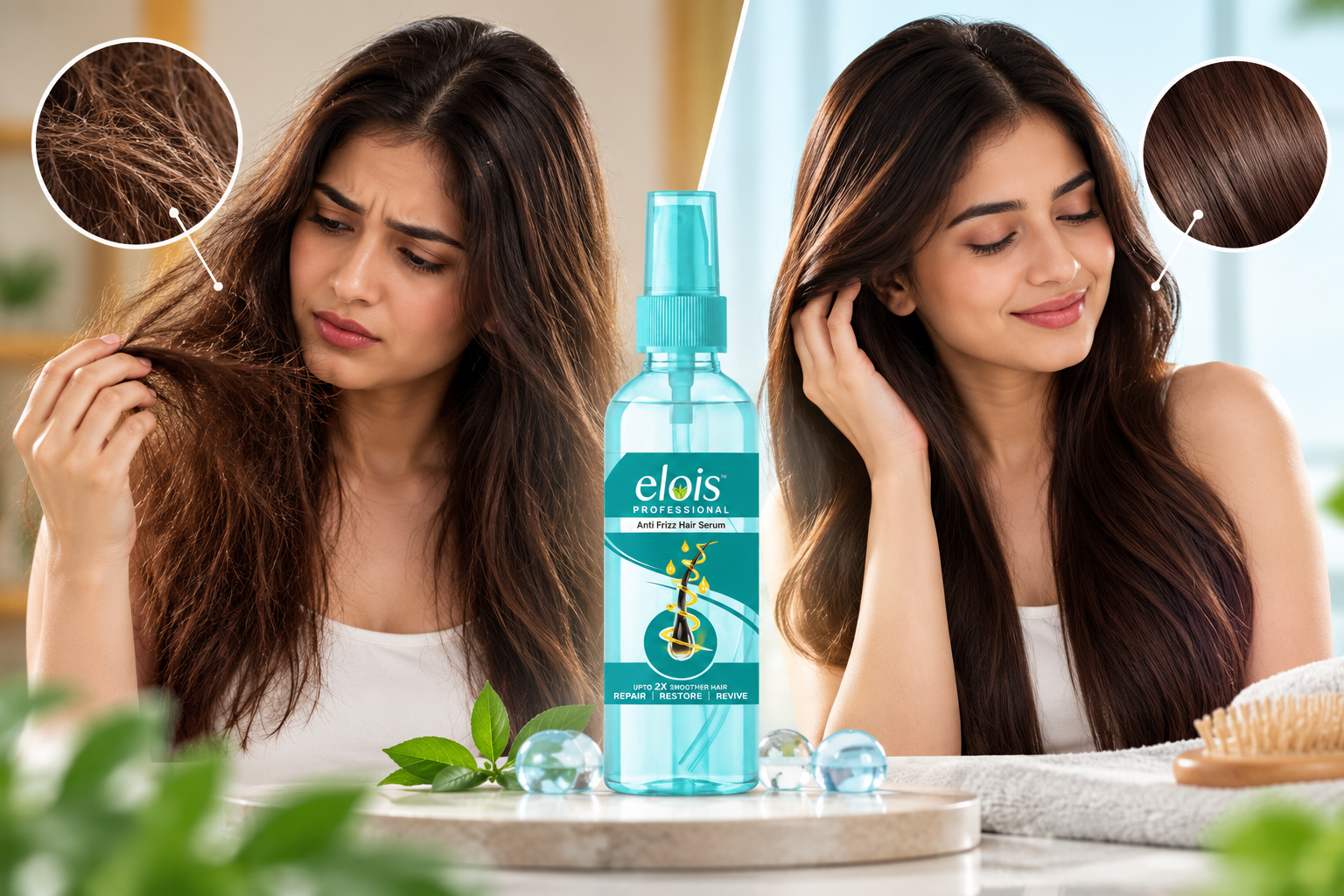
A suitable Hair serum can help reduce friction, tame flyaways, improve shine, and make strands easier to manage. Depending on its formulation, it may be especially useful when your hair feels unruly after washing or styling.
But the amount matters.
Too much product can weigh down fine hair, make the lengths feel coated, or leave your roots looking oily. Start with a small amount and follow the product instructions, concentrating on the lengths and ends when appropriate.
Also, don’t confuse a smoothing serum with a heat protectant. Unless your serum specifically provides heat protection, you’ll need a separate product for that purpose.
The goal isn’t to make your hair feel slippery for five minutes. It’s to make your everyday styling routine easier without relying on a temporary finish to hide every concern.
Your Shower Routine Could Use a Little Attention, Too
Haircare doesn’t need to happen in isolation from the rest of your beauty routine. What matters is understanding what each product is designed to do.
A Shower Gel helps cleanse your body after a long day, a workout, or simply a busy morning. Choose a formula that suits your skin and leaves it feeling comfortable rather than uncomfortably tight.
Your hair, meanwhile, needs its own cleansing and conditioning products. Using the right products for each purpose makes your routine easier to manage.
When Your Skin Feels Dry After a Shower
If your skin feels tight or uncomfortable after bathing, applying a body lotion for dry skin can help replenish moisture and support the skin barrier.
For best results, apply it according to the product instructions, ideally after bathing while your skin is still slightly damp.
It’s a small step that can make your bodycare routine feel more comfortable without adding unnecessary complexity.
And just as your skin needs a routine suited to its needs, your hair benefits from products selected for its own texture and condition.
A Glow for Your Face Starts With the Right Approach
Beauty routines often focus on several concerns at once, but more products don’t automatically mean better results.
A face serum for glowing skin may help address dullness, uneven-looking tone, or other skin concerns, depending on its active ingredients. Choose a formulation that suits your skin and introduce new products thoughtfully.
The same principle applies to haircare: understand what you’re trying to improve before choosing a product.
When you know whether your hair needs better conditioning, gentler handling, or less heat exposure, you’re far less likely to waste time trying random solutions.
Hair Removal Has Its Own Place in Your Beauty Routine
Hair removal is another area where choosing products carefully matters.
A hair removal spray may offer a convenient alternative to shaving, depending on the product and the area it’s designed for. Always follow the label instructions and perform the recommended patch test before use.
If you prefer a hair removal cream for women, check that the formula is suitable for the intended body area and observe the recommended application time. Never use it on your scalp or hair unless it is specifically formulated for that purpose.
These products address unwanted body hair, not dry or rough hair strands. Keeping their purpose clear helps you build a beauty routine that works without unnecessary steps.
Give Your Hair a Week Without Chasing Perfect Hair
Instead of buying something new immediately, try paying attention to your hair for the next few washes.
Keep your cleansing routine suited to your scalp. Condition your lengths. Handle wet hair gently. Reduce unnecessary heat styling, and notice whether your hair becomes easier to detangle.
If product buildup seems likely, consider whether your current routine needs adjusting. If the ends remain rough, assess whether they need more conditioning or a trim.
And if you experience sudden, persistent breakage, noticeable thinning, or changes accompanied by scalp irritation, seek advice from a qualified healthcare professional.
Your hair’s texture alone cannot tell you everything, but it can help you recognise when something in your routine isn’t working for you.
Maybe Your Hair Doesn’t Need to Look Better. Maybe It Needs to Feel Better.
There’s a difference between hair that looks impressive for a photograph and hair that feels comfortable to live with every day.
One depends heavily on appearance. The other is influenced by how easily your hair moves, how it responds to washing, and whether you can run your fingers through it without getting caught in a tangle.
So, the next time your reflection tells you that your hair looks fantastic, take a moment before deciding that your haircare routine is working perfectly.
Notice the ends. Notice the texture. Notice how your hair behaves when you brush it.
You might find that the solution isn’t another shine-enhancing product or a more elaborate styling routine. It could be gentler handling, better conditioning, less heat, or simply a trim.
Because the best hair day isn’t just the one when your hair looks beautiful. It’s the one when you don’t have to fight with it to keep it that way.